Twelve years ago, Wednesday January 31 Solomon died in a car accident in Bangkok. Today Solomon, we remember you and this year bring in the birds with a SOLOMON name in them, and recall how you set us flying with your music, soaring across water, snow, carrying friends and family in your vision from earliest time holding bird or furry animal.
There is a bird named (species) Ptilinopussolomonensis in the Bismark Archipelago. The Yellow Bibbed Fruit-Dove, known for its vibrant and distinctive plumage, is native to the region east of New Guinea. With its striking yellow bib, this beautiful bird adds a splash of color to the verdant landscapes it calls home. Its presence in the lush forests of this region is a testament to the diversity of avian life found in this part of the world. The bird’s enchanting appearance and graceful presence make it a fascinating subject for birdwatchers and nature enthusiasts alike. As it soars through the canopy and feasts on a variety of fruits, the Yellow Bibbed Fruit-Dove is a true symbol of the rich biodiversity found in the eastern reaches of New Guinea.
GymnophapsSolomonensis is known as the Pale Mountain Pigeon, is found In the Solomon Islands North East of New Guinea on the Island of Kolombangara, roosting by the hundreds in forests near the rim of craters… Vocalization: a quiet vruu, low-pitched hoot.
BIRDS IN THE SNOW—Mountain snowboarding up near Tahoe and…… Solomon, the waterbird
Poem by Mary Oliver: I’m feeling Fabulous, Possibly Too Much So
…There couldn’t be a more
splendid world, and here I am
existing in it.
I think, just for the joy of it, I’ll fly.
I believe I could..
And yet another voice says, Can we come down
from the clouds now?
And some other voice answers, Okay.
But only for awhile.
Bird photo: KING FISHER in India by Shabda
Poem by Mary Oliver: Such Singing in the Wild Branches
…it became difficult to tell just what it was that was singing—
…but it seemed
Not a single thrush, but himself and also the trees around him,
as well as the gliding, long-tailed clouds
In the perfectly blue sky—all, all of them
were singing.
And of course, so it seemed,
so was I.
Such soft and solemn and perfect music doesn’t last
For more than a few moments.
It’s one of those magical places wise people
Like to talk about… once you’ve been there,
You’re there forever…
An offering from your Mama….. <> With you, beloved Solomon in the music and on the wings of LOVE! <>
Solomon it is your birthday again July 11, and we celebrate you and your beautiful life !
Twelve years after the car accident in Bangkok that took your life, you are still remembered and loved . Your life was so filled with people, adventures, movement and laughter. Here are some pictures of life-time moments.—Solomon among the teachers and inspirers!
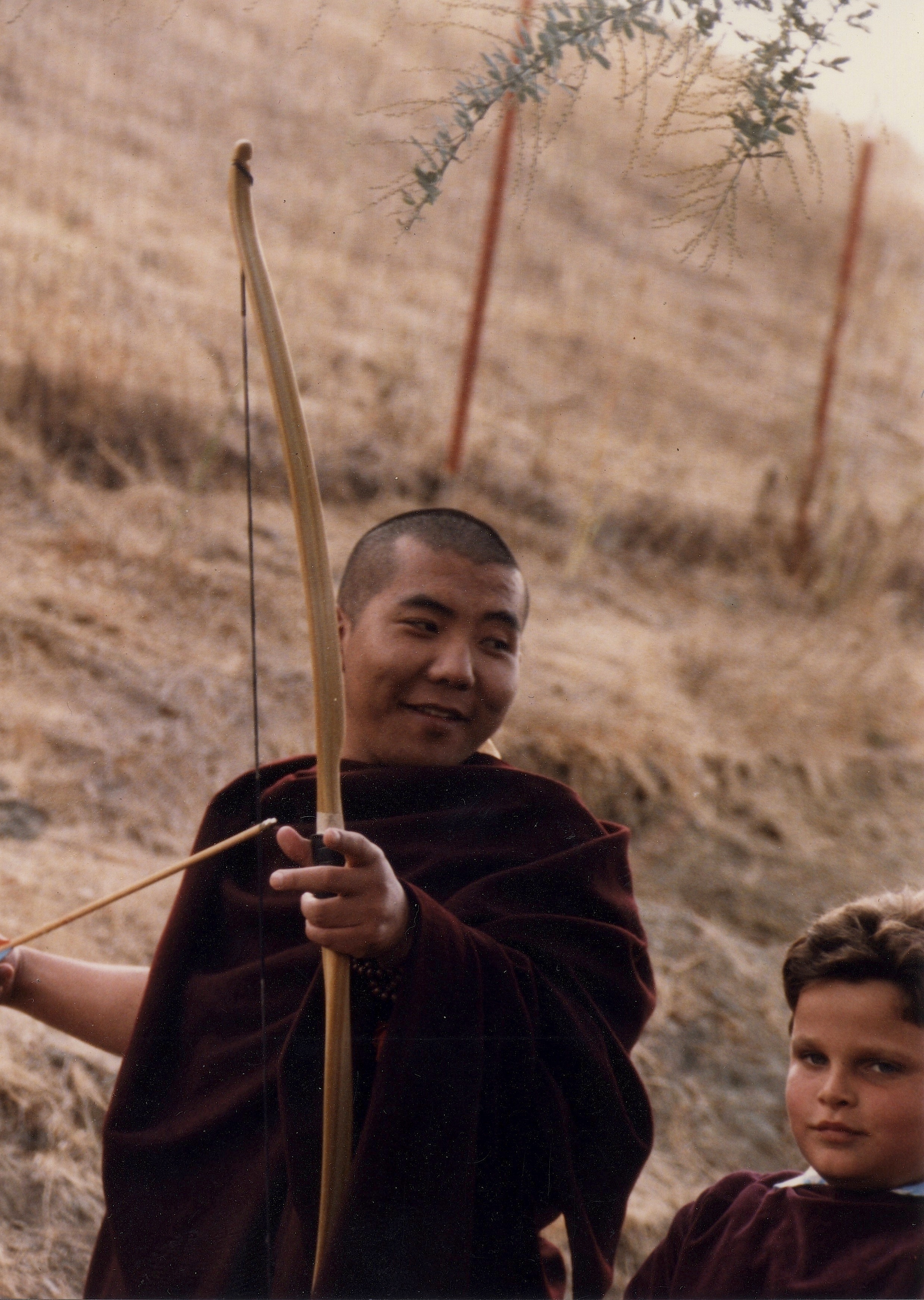
Shabda is holding you, Solomon, in front of City Hall in San Francisco while the Dalai Lama reaches out. This was on the cover of the San Jose Mercury News… Below that is Jamgon Kongtrol Rinpoche practicing archery in our back yard about the time you took refuge with him.
Details
S
While in India you visited Tapkeshwar Caves where Guruji Pandit PranNath lived as a Naga Baba in the 40s.
Solomon and Guriji (Shabda’s Indian Music Teacher) on the porch of our Corte Madera house.
There are many photos on file from URS and birthdays posted here over the years. Enjoy.
January 31st begins the eleventh year Solomon can no longer hug us or play music for us.
That I will not hear his voice on the phone. Yet he is still with many of us very often. That’s Solomon. The following is from your memorial, Solomon, when I was determine to tell stories that would make us smile. Here they are.
April 1, 2012 we gather to celebrate Solomon’s life and wish him God-Speed into his new adventures beyond this physical life. So many friends and family are filling Angelico Hall, at Dominican in San Rafael. Here I offer my speech, and will celebrate with a gorgeous musical tribute by the two Terrys – Terry Riley on piano, and Solomon’s Terry-Dad, Terry Haggerty on guitar. These two musical masters had never played together before this tribute to Solomon. [Imagine the music!]
When Shabda and I were in our late twenties we met Joe and Guin Miller. These amazing elders were real Godparents. They led a walk in Golden Gate Park every week. On holidays there were sometimes more than a hundred people walking from the Hall of Flowers to the ocean. I used to meet with Guin and a group of young women she invited to her apartment above the Theosophical Lodge in SF – some of you have been there – and she would play the piano for us, then we would talk and eat cake. Once I got up the courage to ask her about how it really was for her to have lost her son in the war. Her boy and Shabda had the same birthday. She was quiet for a minute, then said, He’s still with me. She was smiling.
I didn’t get it. I thought she was hiding some terrible grief. Now I understand.
When Solomon turned eleven, and my Uncle Willy, Senator Bill Proxmire had served in the Senate for 29 years, Shabda, Solomon, and I went to Washington DC for a visit. Imagine this: Solomon and his father sitting in the Senate dining room each dressed in suit and tie. The great liberal Teddy Kennedy stopped by the table. So did extremely conservative Jessie Helms, who nodded to us and turned to Solomon – who somehow managed to really look like a small-sized politician – and said, “Well, you look like a fine young man,” then reached out and shook Solomon’s hand. Solomon had the uncanny ability to be at the energetic pitch, and fit in wherever he found himself. After he left, my uncle leaned toward his great nephew and said: “He’s one of the bad guys!”
What a lucky mother I am to be invited to Burningman with both Ammon and Solomon 5 times! In 2003, Ean Golden took me and my good friend Wendy Carlisle in the open top bus where he DJ’d the night-time cruise. Way out on the playa stood a gigantic Steel frame that held five rectangular rock slabs – each supporting ten or more people – that swung gently from chains.
That evening a sizable crowd filled the space below. As our bus slowly approached that lit-up scene we heard the beats, tum tum tum, tum, then the sound of Solomon’s music over an enormous speaker system grew louder. There he was, at the turntable, spinning in the portable playa DJ studio, making people happy. What a party! How many moms get to do that?
He took me to see the film SCRATCH, when it first came out. He explained about the DJ genre and the legendary Philippine scratch-masters.
So when he gave me a photo of himself with Mix-Master Mike at the Warriors game, I framed it and put it on the wall. A few months later we had our house painted, and a surly painter stopped in his tracks and asked me, who is the guy with Mix-Master Mike? That’s my son, I told him. I wish you’d seen his face! He was really really nice to me for the rest of the job.
Then there was Las Vegas. He got me compt’d at a pool-side room in the Hard Rock Hotel, where he and Chris Clouse played a dinner set on Thursdays. At One AM he was to play the Taboo Room in the MGM Grande. I had my friend Palden with me and we took a cab. The lobby is enormous. There was a pounding beat, and a long line to get in. I addressed the bored looking Hollywood-type who held a clip board at the door. I’m DJ Solomon’s Mom! I shouted. He looked at me deadpan, took in the dreads, my age, my clothing. Then he said: Well, that’s a first! And stamped my hand and hers. We went in and waited for Solomon. Soon, I saw him. He arrived and connected his computer to the sound system and began, no introduction, and no more than 6 seconds between the exiting DJ’s last tune and his first––– all without slowing down the momentum – I understood.
DJ Solomon would be just fine doing what he did. He was a consummate professional, a star.
When Solomon cruised, he often took me with him, now it’s my turn to take him along. I recently wrote down these words:
Take me with you, Mom, into your life, and what you do. Let me bring the balance and glide of boarding into the continual challenge of your everyday life. And please keep loving Nicole….. Thank you. <> <> <>
“My love for you is in everything you do….” These words came as a strong message to me from you, Solomon. I received them soon after I heard that you had died in a car crash in Bangkok, January 31, 2012. It feels like you are with me, not somewhere else, both then and now. You had a full-to-the-brim life in your 34 years. Knowing this has supported me greatly, allowing grief to feel less hurtful. You would be 45 today. I’m celebrating your life right here.
Happy Birthday Solomon
Here is a poem I wrote in the early 1990s
Lines That Bind
When Solomon was twelve
he mentioned one night over spaghetti
that he found out mediocre was a real word.
Someone not in our family had used it.
He always thought his Dad made it up.
Ammon was three
when we lived on the fault line in Olema.
We walked the woodpecker trail
in the National Seashore,
where the sign in the meadow read:
This is where the farmer’s cow
fell into a crack in the 1906 earthquake.
The only thing left above ground was the tail.
My son looked looked up at me
eyes stretched wide.
“Where do you go when you die, Mom?”
I lived with this question,
felt the bright metal of it
crack and join at high temperature,
made a small book of words and drawings
of butterfly cocoons, apple trees, and
a Scottish bagpiper lying in a coffin.
Some day I’ll go to Alaska
for the thaw.
I’ll stand by a big frozen river and listen
as the ice breaks up, rumbling, scraping,
feel the world let go. <> <> <>
Here are some email clips Solomon sent us.
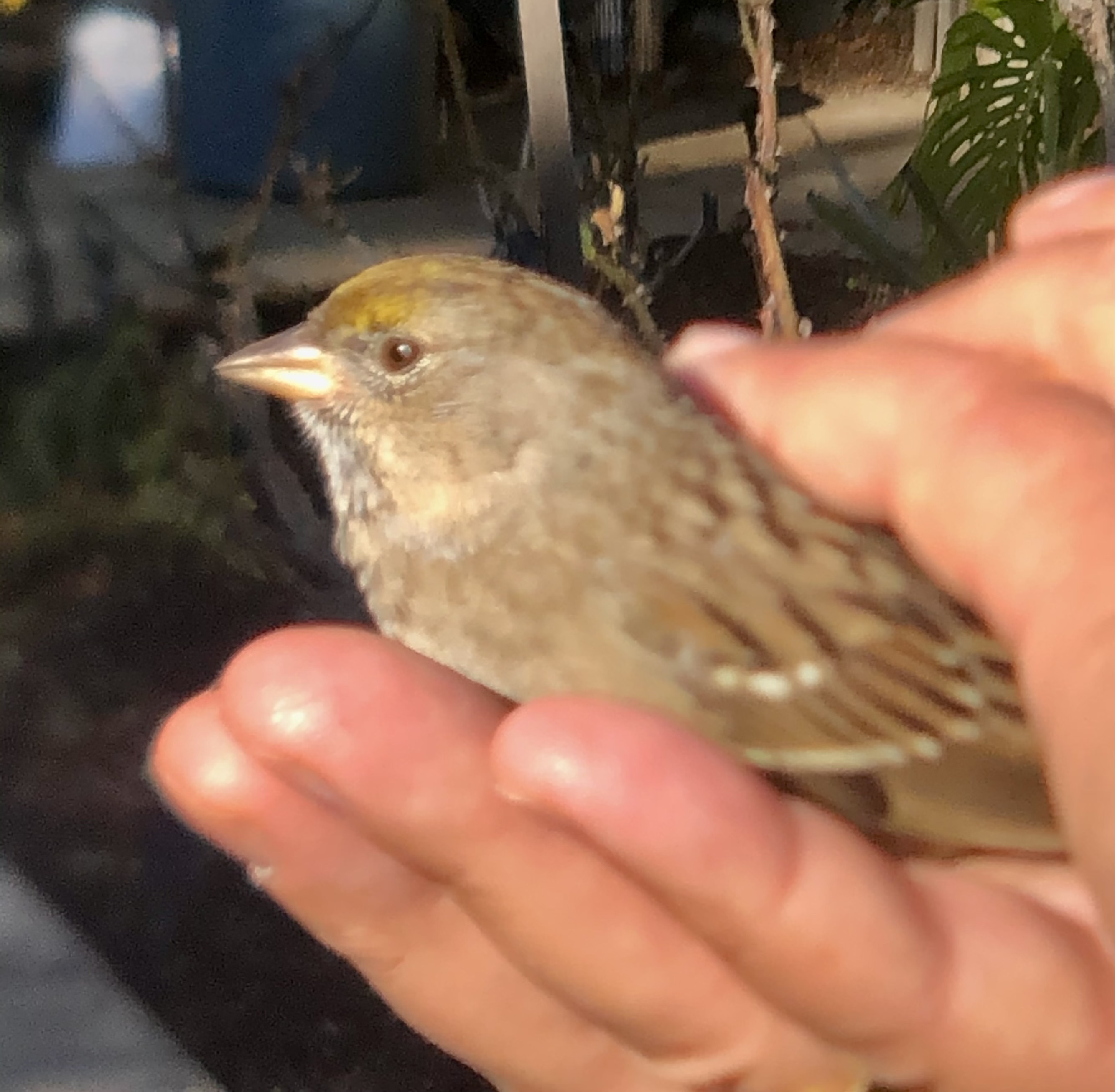
He sent a photo of an eagle further away than this picture, a blurry one he took with his cell phone to his dad with this message: “I think I’m picking up the slack in the bird department while you, Dad are out of the country. Here are some shots of a Bald Eagle that was nested right next to our houseboat in Shasta last week. If you zoom in on the pic you can get a very good look at him. After seeing him in person it’s no wonder we chose this bird as our national mascot… 🙂 ”
Another email note he sent us when he was interpreting Spanish/English on a snow board trip to CHILE: “So I gotta be really quick. Gotta go Chillian today with the tour. Am working all this week, riding (snowboard) every day, having a blast. I am just in Santiago for this morning. I had a crazy night last night dj-ing then stayed up most of the night in a club where Pablo Neruda used to read his poetry… Super bueno. Mom, can you let me know your Burningman plans? Much Love, your son in Chillyyyyyyy….”
SnowBoarding in Chile
A birthday invitiation 2008:
“Hello Family….I am extending an invite to our wonderful family for a day of boating/birthday celebration as I bring in the 31st year of my time on our little rock. We thought it would be fun to have everyone go out on a Sunday, as Sundays seem to work pretty well for everyone. The boat is located in Tracy about an hour from SF…picnic lunch. Any questions? Hope you all can make it. Much Love, Solomon”
Boating BirthdayHere goesYes! YES!!
Your friends are thinking of you today, Solomon and you are with us taking us into snow, waves and always, the best music. We all miss and love you!
I’ll be seeing you…in all the old familiar places That this heart of mine embraces all day thru… I’ll find you in the morning sun and when the night is new. I’ll be looking at the moon—but I’ll be seeing you. —Song 1938 I’ll be Seeing You
the look of him /the beauty of the man is his comings and /his goings… his place is never taken… which is /the kind of man he is —Lucille Clifton the kind of man he is
DJ Solomon, by Oona Haggerty (Solomon’s niece)
Clap along if you feel like a room without a roof (Because I’m happy) Clap along if you feel like happiness is the truth —Pharell Williams
The world asks of us only the strength we have and we give it. Then it asks more, and we give it. —Jane Hirshfield The Weighing
Your absence has gone through me like thread through a needle Everything I do is stitched with its color —W.S. Merwin
Sending you love and gratitude Solomon. For your heart, wisdom and full life.
Solomon was born on July 11, 1977, and left us on January 31, 2012. He would be 44 on this birthday. For all who still feel a loving connection I offer a short tribute to Solomon as DJ SOLOMON, the way he offered music to so very many friends and how we moved and grooved in his inspired musical mixtures. Thanks to Solomon’s brother Ammon for making this short clip. You are with us Solomon!
January 31 our son Solomon lost his life in a car accident in Bangkok Thailand. Every year at this time I write to you Solomon, to share some beautiful moments of your life and celebrate what you brought to Shabda and me, Nicole, Ammon and his family—and all your cousins, friends, sports and music fans and long-time-ago schoolmates.
Dear Solomon, I was thinking about you and music, and Pharrell Williams makes me smile and feel like moving, like I did to your DJ music awhile ago…when I listen to his song from 2013 – HAPPY —
Clap along if you feel like a room without a roof (Because I’m happy) Clap along if you feel like happiness is the truth (Because I’m happy) Clap along if you know what happiness is to you (Because I’m happy) Clap along if you feel like that’s what you wanna do…
Solomon, Nicole, Ammon, Laura
LAS VEGAS! According to the pictures it was March 27, 2007 that my friend Palden and I flew to Las Vegas to hear you make music and relax at the Hard Rock Café. You set it up so we were VIP’s with a nice room overlooking pools and a waterfall. Once a week you and Chris Clouse played in an outside restaurant – Hard Rock Cafe – there inthe dinner hours. We got in a taxi just before 10. “From 10 pm until way late” DJ Solomon was the music for STUDIO 54 at the Las Vegas MGM GRANDE.
There was a trail of velvet ropes holding people who wanted to enter, between the lobby entrance and Studio 54. We went to the crowded club doorway. Inside the music pounded. A Hollywood type doorman looked doubtfully at the two women who were clearly over 40… “I’m the DJ’s mom,” I said. He looked amazed, surprised as he’d been all night. “Well, that’s a first!” he laughed and stamped our wrists. Inside it was full out. Loud and peaking—both the energy and the music. After about 5 minutes, with us pressing our way into the second room, past a very small DJ booth, the music stopped. It was less that 60 seconds before Solomon plugged in and turned up the volume on his set. The dancers and arm wavers picked up and went with it, as if he didn’t miss a beat. I turned to Palden and said, “tonight I know that Solomon can do this full time as long as he wants. He’s a pro.”
None of us can forget your passion for boarding—water, snow— You called yourself an adrenalin junkie, loved speeding in your car, on your bike —OOoooo— the beauty of acceleration! This from friend Leila Burrows:
Leila and William
Leila writes me: Every year at this time I find myself remembering Solomon. Our friendship was quick and fast in large part because among other things we shared three loves : Water sports, Snow sports and Nicole… Solomon, I’m sorry my husband Brendanand son William never got the chance to know you. When I learned our baby was a boy, I thought, wonderful! The chance to raise a good man. You were a good man. Although William will never get to shred or go boating with you, we will raise him to be like you: kind, inclusive, generous and fun. We will play in the snow and not take for granted what a gift it is to be alive. I love you, I miss you, I thank you. ❤️ Leila
Your nieces have become amazing girls as the photos show. Maeve was in utero 9 years ago, but Oona had a ride on your shoulders in December 2011. Wish you were here to be with them and teach them a few of your best tricks in the sports world and on the music boards.
Solomon and Oona 2011
Oona and Maeve, 2020
I miss you too, Sweetie!Solo and his Dad Shabda at Lake Tahoe
In this difficult time of the Covid Pandemic I am glad you don’t have to worry about how the world of music can support you. (Although I’m sure you and Nicole would have a plan!). Live music played in concert halls, City Hall, clubs and outdoor places is so much better than on zoom. I’m wishing you could see the branches with plump green avocados in the garden. Most amazing of all is the banana tree with clusters of new bananas here in Terra Linda! I’ve never seen either fruit in Marin County.
Solomon, DJ for the Warriors!
We miss you and appreciate all our great memories when this time rolls around each year. Know you are with us— KNOW I take you with me and share you with all the many friends who love you and will read this.
Our mother ancestors hold the knowledge of the womb of love and compassion. Combining history’s stories with poetry allows me to attune to a communicated essence carried and shared in the tradition of Lucille Clifton who wrote a poem on Joan of Arc: to joan, …did you never wonder/ oh fantastical joan/ did you never cry in the sun’s face/ unreal unreal?…
Another favorite poem is W.S. Merwin’s Odysseus:Always the setting forth was the same,/ Same sea, same dangers waiting for him/ As though he had got nowhere but older.…
Traveling with Joan and Odysseus, the creation of inner cinema of lives that become known, felt more deeply— continues to have tremendous appeal to me. After joining Moroccan Sufi women in chanting (zikr) more than 20 years ago, I began to read the stories of the women in their line of ancestors, back to Prophet Muhammad. I felt their strength and influence on the man who guided the birth of Islam long ago. They are still with us, here today.
From my book: Fatima’s Touch, pp. 43, 44…
Intro:
It was a hot day. Umm Ayman looked in the window and saw Fatima (daughter of Muhammad) asleep, with the millstone spinning, the cradle holding Husayn rocking itself, and a hand raised in praise. She went to the Prophet and told him what she saw. She asked him, “Who was grinding, rocking, praising?” He laughed and told her the names of three angels.1 Husayn holds the tender place in the story, as the son constantly remembered in Shia history, assassinated decades later in the massacre at Karbala. Umm Ayman was the servant of Amina, mother of the Prophet. She assisted in the birth of Muhammad and years later—his children. She was the rock of the family.
While She Sleeps
One grinds. One praises God. One rocks Husayn.
Uplifted gesture in the air—what’s this?
Two angels brought by Gabriel—one mills
the grain for Fatima, one gestures praise.
You see it and you don’t. Not flesh and blood,
nor anything like that. Transparent hands.
Who rocks Husayn? What fingertips can nudge
The cradle? In the room his mother sleeps,
exhausted, fasting, ripe for angel aid.
Her grindstone turns, as if it were a top
and bread could make itself. Who rocks Husayn?
A touch so light, the child smiles in his sleep.
The outside world is still, the stems of thoughts
curl tucked inside, while Gabriel bends down
to stroke his cheek, his heart-shaped face. Don’t ask
Who rocks Husayn, that little cup of love.
1 Encyclopedia of Fatima, 17:119, 120. See also Muslin, The English Translations, 4, #1701. Form iambic pentameter — blank verse.
And from my book Untold, A History of the Wives of Prophet Muhammad this poem:
It is the way for the Wife of the Prophet not to turn her back on us. After she notices we are looking to her, she opens the door and beckons us in. But we are just watchers, wanting to be close-up from a distance. We stare at one young wife, leaning forward, her chin on Muhammad’s shoulder, her fingers squeezing his arm while the Abyssinian woman dances. Another wife gives Muhammad a turn of phrase to calm a thousand disobedient men. We notice the well-shaped mouth, the strong white teeth, her damp hands on a towel. A future wife stands looking at Muhammad’s open face. We hear her gasp and understand. She’s modest. Still, we can’t stop looking. Close details make each wife’s bustling seem intimate, but not too real. We wonder what we’d see inside. There might be holy striving, talk of paradise, a questioning remark, a judgment. We may never know, although there may be truth there that we need, some understanding from the source; some word of how it was before something startled the world into thinking — us and them.[i]
[i] End notes: There is a hadith that Aisha, watched the dancers in the Mosque, illustrating how relaxed Muhammad was with spontaneous expression. The source is the Alim on CD-ROM, narrator al-Tirmidhi, Aisha hadith, #1565. The other references are to his wives, Umm Salama (at Hudaybiyya) and Zaynab.
<> <> <>< ><> <> <>
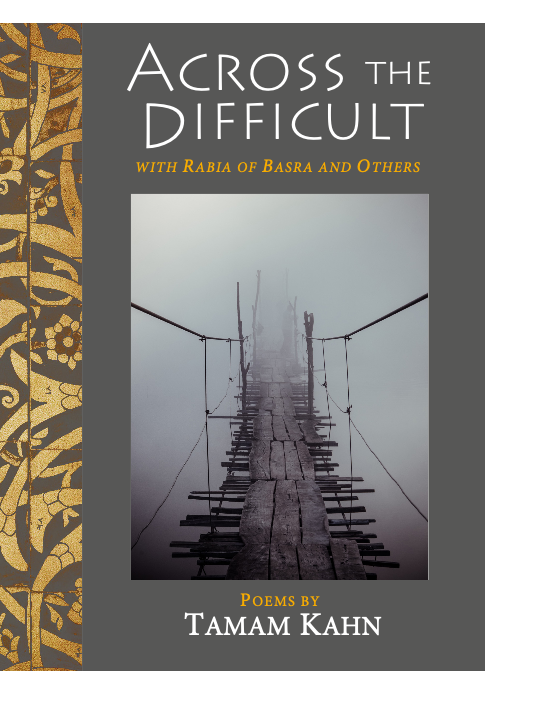
After Untold and Fatima’s Touch, I continue to write about women of history. Most recent is Rabia al’Adawiyya of Basra, the 8th century Sufi woman seen as a saint by many in the Middle East.
What did Rabia Wear?
Rabia, I can’t help it. I’m accustomed to bring home the landscape, an Islamic culture like something out of the Yunus Emre Netflix series from Turkey, with its dirt roads, people walking with mules and hand carts, a minaret with the call to prayer. It’s hot and damp in Basra. Palm fronds will shelter as a roof. What are you are wearing as you walk in longing for God? Sandals in the mud, and a layer or two. Not dirty, but pale cloth, a gauzy veil scrubbed in well water then set to dry on a line near the door. The long sleeved tunic is woven to last, a coarse cotton. I think you were gifted with used tunics from a devoted friend or two. Here’s beautiful fabric, say pale green, with the woven words of God almost worn out on the sleeves. The scribes leave you clothed in nothing but words, but that’s just their way to show how Holy you are. Along with this: robed in the quintessence of pain… Pain? I want to see the fabric move as you walk, haul water, gather dates, or drape it on a hook before bed—when you slip into something else, a lighter covering. As a woman, I like the practical side of bringing you forward twelve-hundred years or so. How you look with an old cat in your lap.







 CompleteWord